ServicesWater Softener Installation
Water Softener Installation in Apache Junction
Chalky faucets, spotted glasses and a water heater full of mineral buildup all trace back to hard water. We put in a softener matched to how your family uses water, tied into your plumbing properly, with a real drain and a bypass valve so the house always has water.
How a softener works and who needs one
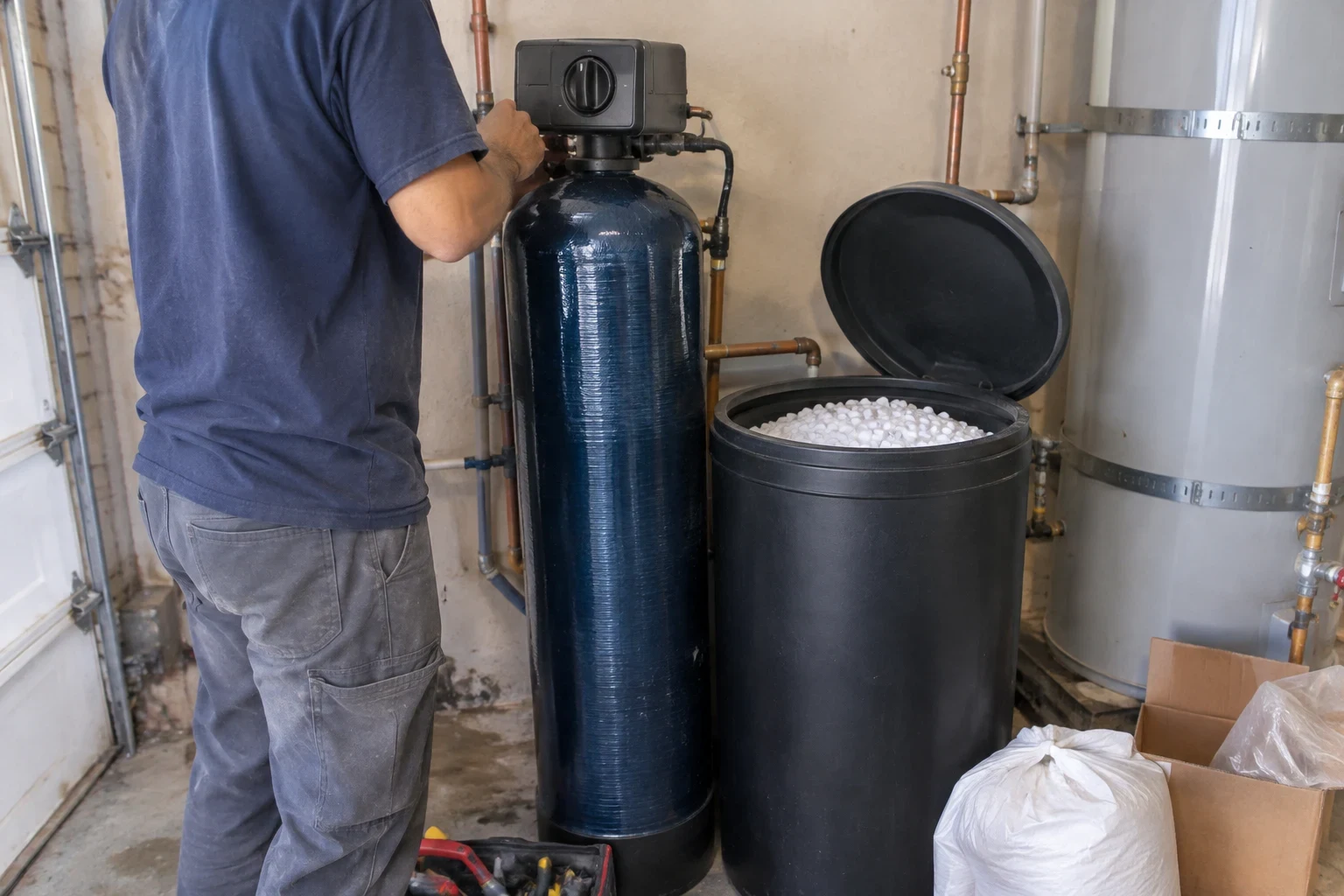
Inside a softener is a tank of resin beads. As water flows through, the beads grab calcium and magnesium and give off sodium in their place. Every few days the system rinses the beads with brine from a second tank, sends the trapped minerals down the drain and starts over. What comes out the other side stops leaving scale in your pipes, fixtures and appliances.
It is worth doing when showerheads keep clogging, the water heater pops and rumbles, or soap leaves a film you cannot rinse away. Hard water is the norm in this part of Arizona, so most homes around here deal with at least some of it.
A softener will not take out chlorine taste or clean up your drinking water. For that, see our Whole-Home Filtration or Reverse Osmosis System pages. Lots of homes put one of those in next to a softener.
What comes with the install
Right-sized for your household
We ask how many people are in your home, how many bathrooms you have and what the buildup looks like. That tells us the resin tank size. Go too small and it regenerates nonstop. Go too big and water can tunnel through the resin, which wastes salt.
A spot that makes sense
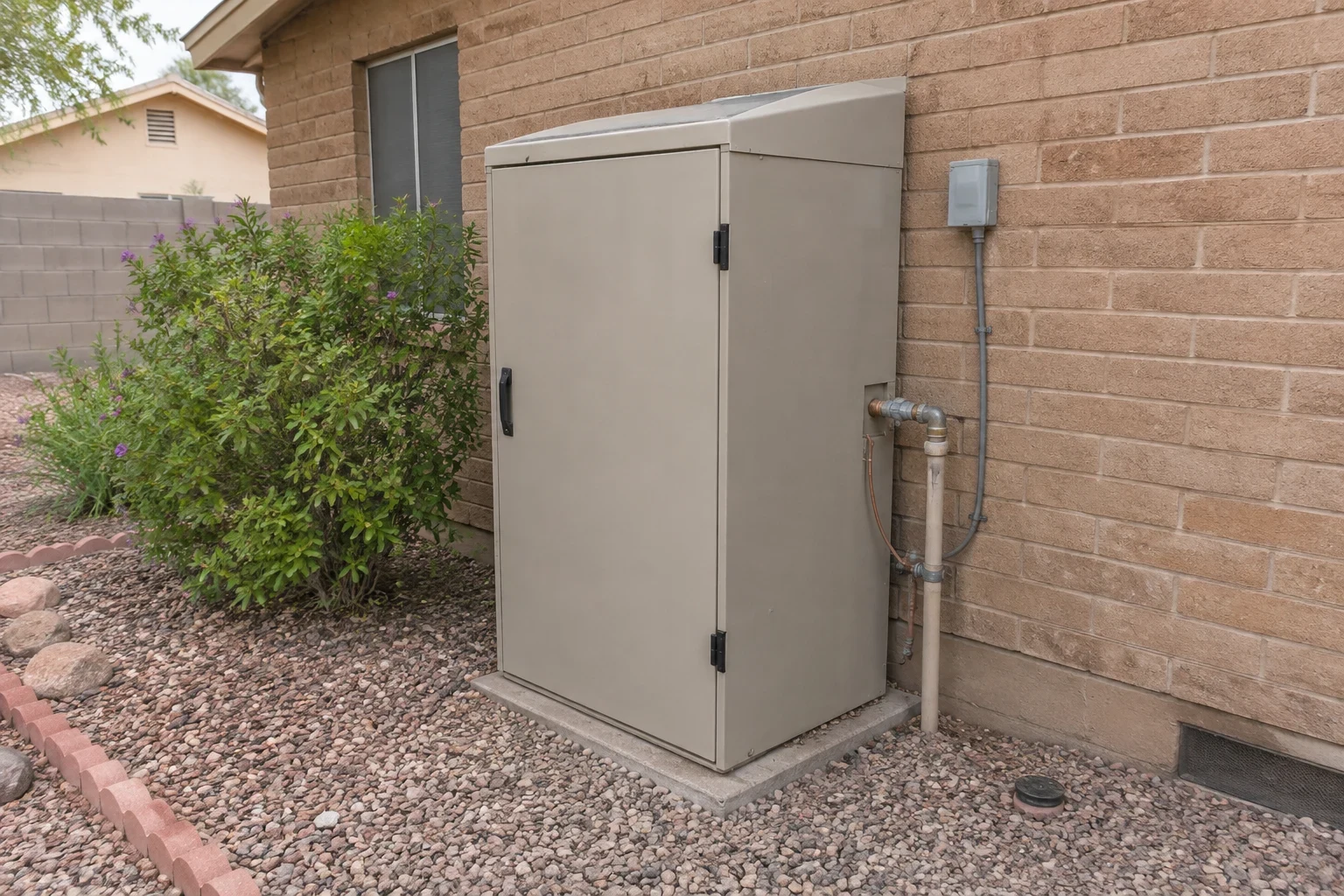
A lot of newer houses around Apache Junction have a softener loop already stubbed into the garage. Older and manufactured homes often lack one, so we work out where the tank sits and how it ties into the main. For an outdoor spot, we plan shade or a cover, since summer sun breaks down plastic tanks and control heads.
Bypass valve and hookups
Each system gets a bypass valve. When the softener needs work, one handle turn keeps water flowing to the rest of the house.
Drain line with an air gap
Rinse water from regeneration needs a place to go. We route the drain line to a suitable spot and leave an air gap, so dirty water has no path back into your clean lines.
First fill and a walkthrough
We put salt in the brine tank, set the control valve for your household and run the first regeneration. Then we show you where to check the salt and how the bypass works.
Signs hard water is getting to your home
Chalky buildup on fixtures
That white crust on faucets, showerheads and tile is mineral scale. When it is back a week after cleaning, your water is the cause.
Cloudy glasses
A hazy film on glassware fresh out of the dishwasher is one of the easiest hard water clues to spot.
A noisy water heater
Popping or rumbling sounds usually mean minerals have piled up at the bottom of the tank. The heater then burns more energy to warm the same water.
Soap that barely suds
Hard water works against soap. You go through more shampoo and detergent, and your skin and hair may feel dry.
A softener that gave out
If your current unit eats salt too fast, drips at the head or has stopped softening, a new one is often a better bet than hunting down parts.
What happens on install day
- 1
A phone call first
You describe your home, the buildup you see and whether a loop is already in place. We tell you straight what size and setup will work.
- 2
Shut off and drain
When we arrive, we close the main, drain the line and lay down protection where we will be working. An old softener gets disconnected and hauled away.
- 3
Tanks, pipes, drain and plug
We set both tanks, plumb in the bypass, run the drain line with its air gap and plug the control head into an outlet close by.
- 4
Salt, settings and a leak check
We fill the salt, set the valve, run a regeneration and look over every joint for drips. You learn how to check salt and use the bypass before we go, and we leave the area clean.
What sets the price of an install
Every home is set up a little differently, so we quote the job after we hear about yours. Two things matter most: how big a system your household needs and how much pipe work it takes to get it in place. You hear about each part of the price before we start.
- Tank size
- More people and more bathrooms call for more resin and a larger brine tank. The equipment costs more, but a properly sized unit is not forced to regenerate constantly just to keep pace.
- Loop in place or not
- If your garage already has a softener loop, the hookup is short and simple. With no loop, we cut into the main line and build one, which takes extra pipe, extra fittings and a longer day of labor.
- Distance to a drain and a plug
- Rinse water from regeneration has to go somewhere, and the control head needs power. If your home has neither near the spot where the tank will sit, we run a line to each, and the farther we go, the more the job involves.
- Hauling out the old one
- Taking out a worn softener and disposing of it adds labor. It adds more if the old pipes need fixing before the new system fits.
Softener install questions we hear
Something not covered here? (480) 351-6902
Will soft water taste salty?
It should not. A softener adds only a small amount of sodium, and for most people it does not register on the tongue. If you would like drinking water without it, a reverse osmosis system under the kitchen sink handles that. Plenty of homes run both.
Can the softener go outside?
It can, and lots of homes around here have theirs outdoors. Sun and heat are the problem. We pick a shaded spot or add a cover so the tank and control head last through the hot months.
How long does the install take?
Hooking up to a loop that is already there usually takes part of a day. Building a new loop off the main line runs longer. Your water is shut off only during the cut-in and connections.
Do I need a permit?
Setting a softener on an existing loop is usually basic plumbing. If your job calls for new lines or electrical work that needs a permit, we say so before the work is booked and take care of it before we begin.
How often do I add salt?
The size of your household and the valve settings decide that. A monthly peek into the brine tank is enough for most families. If hauling heavy bags from the store is a chore you would rather skip, our automated salt delivery can take it off your list.
Does a softener remove chlorine?
No. It only deals with the minerals that make water hard. For chlorine taste and smell, whole-home filtration is the right tool, and it can be plumbed in just before the softener.
Done fighting crusty faucets?
Give us a rundown of your home and the buildup you keep cleaning. We will go over sizing, where the tank should sit and what the work looks like, all before anything goes on the calendar.