ServicesReverse Osmosis System
Reverse Osmosis System in Apache Junction
We put reverse osmosis systems under kitchen sinks so you have clean, good-tasting water at its own small faucet. It covers drinking, cooking and ice, and it ends the trips for bottled water. Once it is running, we walk you through the filters and leave your cabinet tidy.
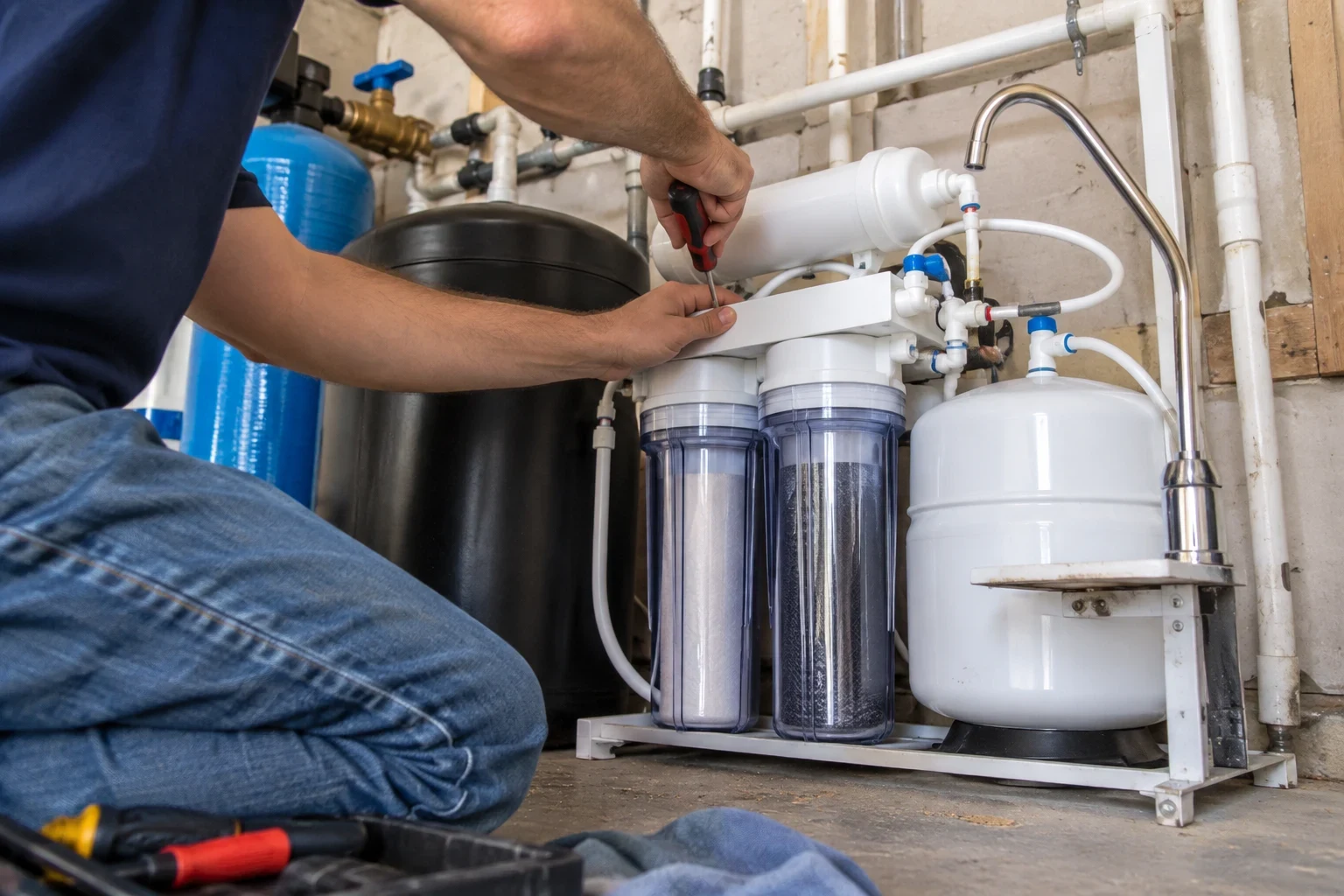
How Reverse Osmosis Works
Reverse osmosis forces tap water through an extremely fine membrane. Most dissolved minerals and salts, plus a lot of other material, cannot pass through. The membrane flushes them away, and you get clear water with a clean, neutral taste from a dedicated faucet.
This is a point-of-use system. It handles the water you drink and cook with, not every pipe in your home. Scale on faucets, spotted glasses or a chlorine smell in the shower call for water softener installation or whole-home filtration instead. Plenty of our customers run both, an RO at the kitchen sink and a softener in the garage, since each covers a different need.
East Valley water carries a heavy load of dissolved minerals. You see it as chalky buildup in the kettle and taste it as a flat or slightly salty flavor. RO removes most of it from the water you drink.
What Comes With Your Install
Four-stage filter unit
First a sediment filter traps sand and grit. Next a carbon filter pulls out chlorine, which would otherwise harm the membrane. The membrane does the heavy lifting, and a last carbon filter cleans up the taste before the water reaches you.
Its own faucet at the sink
Your RO water gets a separate spout on the sink deck or counter. No open hole? We cut one using a bit made for your surface, from laminate to granite to quartz.
A tank that leaves you room
Most units come with a compact pressure tank that sits in the cabinet. We position it so the trash can and cleaning supplies still fit.
Drain line done right
Rinse water from the membrane leaves through a saddle clamp on your sink drain. We install it so used water has no way to flow back into the unit.
Line to the fridge, if you want it
We can tie the system into your refrigerator's water dispenser and ice maker. You get clearer ice, and the fridge's own filter goes longer between changes.
Leak check and a quick lesson
Before we pack up, we flush everything, look over each fitting for drips and show you where each filter sits. You will know what to replace and about how often.
Signs Your Kitchen Needs Reverse Osmosis
You keep buying water by the case
Lugging cases home or refilling five-gallon jugs wears thin fast. With an RO system, that same drinking water comes out of a faucet at your sink.
The tap water tastes wrong
Water that tastes salty, flat or like a swimming pool is usually carrying minerals and chlorine. The membrane removes the minerals, and the carbon stages handle the chlorine.
White crust in the kettle or coffee maker
When water heats up, minerals drop out and bake onto the inside. Using RO water in those appliances keeps that crust from forming.
Cloudy ice cubes
Minerals in the water turn ice milky and can leave little flakes in your drink. RO water freezes into clear cubes.
An older unit that drips or barely flows
A weak stream at the faucet, a wet cabinet floor or filters that haven't been changed in years all point to trouble. New filters are sometimes all it needs, and we will tell you when that's true.
What to Expect From Start to Finish
- 1
A phone call first
Describe your kitchen layout, your sink and whether the fridge needs water too. We will ask how your pressure feels and whether a softener is already in place. You get your quote by phone before anything is scheduled.
- 2
A look under your sink
On install day we start by checking the cold supply, the drain, the shutoff and how much cabinet space you have. If the shutoff valve is worn or stuck, we tell you before any work begins.
- 3
Putting it in
We hang the filter unit, set the tank, mount the faucet and connect to the cold line and drain. A fridge line goes in at the same time if you want one. A typical kitchen takes a few hours.
- 4
Flushing and cleanup
Fresh filters have to be flushed before you drink from them. We watch each connection for drips, show you how to use it and wipe the cabinet clean on the way out.
What Moves the Price of an RO Install
Every kitchen sink cabinet is a little different, so we quote each job by itself. The system you choose is one piece of the cost. The other piece is the time it takes to fit that system cleanly into your home.
- The system itself
- A standard unit with a storage tank costs the least. Tankless units run higher. So do systems with a remineralizing last stage that adds a little calcium and magnesium back for a fuller taste.
- Your countertop material
- Granite and quartz need a diamond bit and more care, so drilling a fresh hole takes longer. An unused sprayer or soap dispenser hole can often take the RO faucet, which keeps things simple.
- Distance to the refrigerator
- A fridge next to the sink is a quick hookup. If the tubing has to cross the kitchen or pass through several cabinet walls, it adds material and labor.
- Water pressure
- An RO membrane works best with steady pressure behind it. If your home runs low, we may suggest a booster or permeate pump so the tank fills properly.
- Condition under the sink
- A shutoff valve that won't turn, fittings caked with mineral or a crowded cabinet can call for some prep before we mount the new unit.
Reverse Osmosis Questions We Get
Something not covered here? (480) 351-6902
Will RO strip the minerals from my water?
Most of them, yes. That is why the water tastes clean and the kettle stays free of scale. If you like a bit of mineral taste, we can install a system with a last stage that puts some calcium and magnesium back.
If I have RO at the sink, do I still need a softener?
They do different jobs. RO cleans the water at one faucet. A softener treats every line in the home and protects the water heater, fixtures and appliances from scale. Hard water also wears out an RO membrane sooner, so softened water helps it last.
Doesn't RO send water down the drain?
Some, yes. That flow rinses the membrane and keeps it working. Newer systems and permeate pumps cut the amount down, and we can talk through those options on the phone.
How often do I replace the filters?
Expect to swap the prefilters and the final filter every six to twelve months, closer to six if your family uses a lot of RO water. The membrane goes much longer, often several years. We show you each part on install day so ordering replacements is easy.
Is there room for it next to a garbage disposal?
Usually, yes. We arrange the unit around the disposal and the drain pipes. If the cabinet is really cramped, a slim tank or a tankless unit generally solves it.
Could it go in the garage?
We don't recommend it. Local garages get very hot in the summer, which is hard on the filters and on water stored in the tank. A kitchen install also keeps the run to your faucet short.
Better Drinking Water Starts Under Your Sink
Give us a quick picture of your kitchen and how your family uses water day to day. We will lay out the choices and tell you honestly which one suits your home.